 One Donor Many Lives
What Can One Donor Do?Change Many Lives.
A single anonymous kidney donation sparked a chain of hope.
Now we're inviting the world to continue it.
This movement begins now.
Most organ donations happen after death. Dr. Thankam chose to donate while living — an extraordinary act that's inspiring thousands more people to pledge after life.
Share your story or message of gratitude
Part of a growing nationwide donor movement
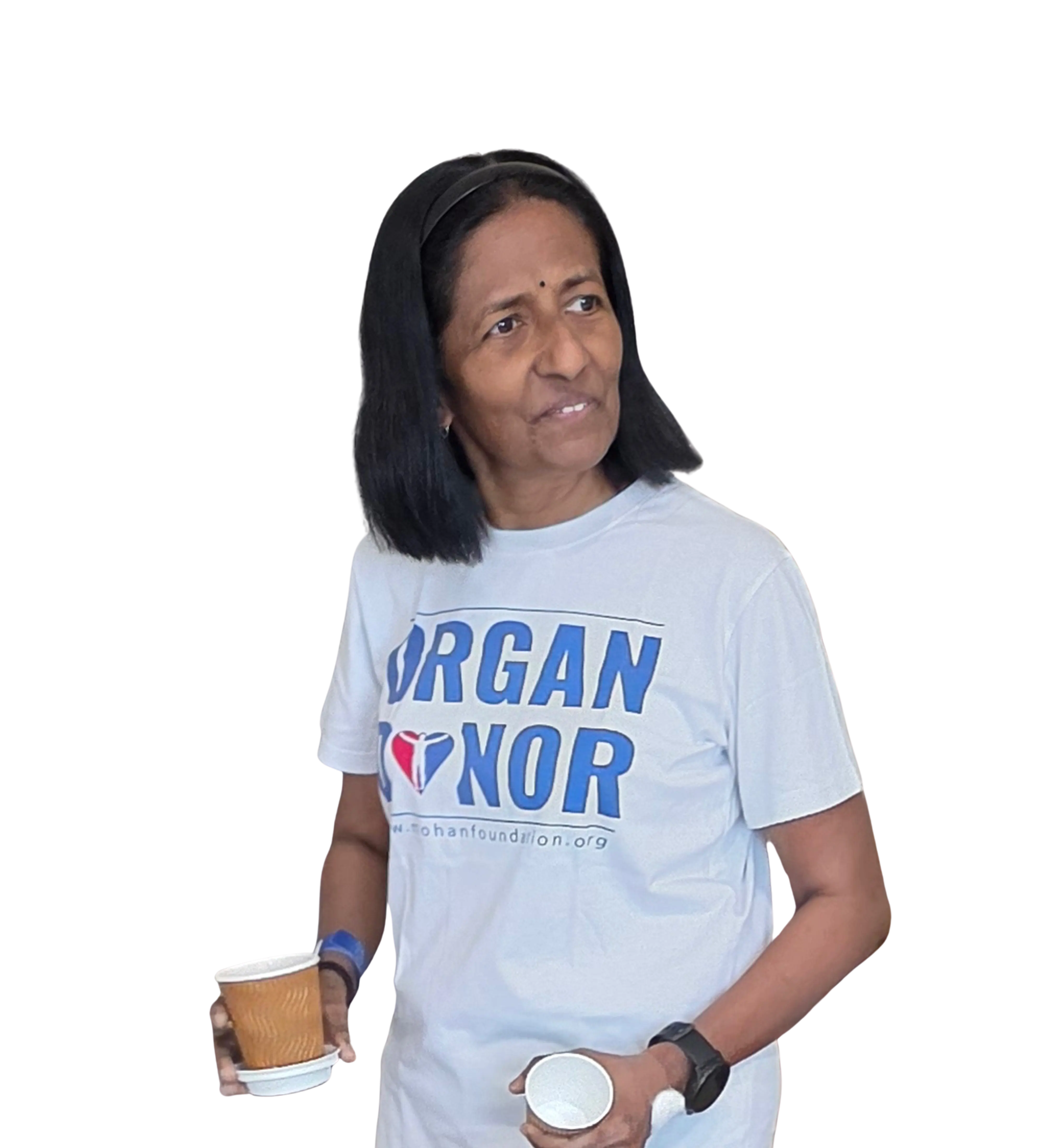
Dr. Thankam Subramonian
First anonymous kidney donor in Karnataka
Her living donation sparked a movement that continues to grow.
Share your story or message of gratitude
Part of a growing nationwide donor movement
A single act. A lasting ripple.
On February 10, 2026, Dr. Thankam became Karnataka's first anonymous, non-directed living kidney donor.
This site exists for two reasons: to honor her courage, and to help more people discover a simpler first step that saves lives too: pledging posthumous organ donation.
You do not need to donate a kidney to be part of this movement.
Kidney Transplant Reality Today
A single altruistic donor can unlock compatible matches that would otherwise never happen.
25,000+
Kidney transplants per year in the U.S.
Majority = deceased donors
Living donors are a minority
Anonymous non-directed donors = rare
But they can trigger transplant chains
1 donor → multiple lives impacted
Via paired exchange systems
How change begins
Every life-saving system follows a pattern.
Every life-saving movement starts at the margins. What feels rare today can become normal tomorrow.
Anonymous donation is still early in this arc.
Fringe
A few people act before society understands
At the beginning, only a handful of people step forward. The act feels radical because the system around it does not yet exist.
Rare
Legal, possible, but unfamiliar
Even in mature healthcare systems, anonymous living donation remains uncommon. Rare does not mean insignificant. Rare often means early.
Symbolic
Stories shift what society believes is possible
Early cases become stories. Stories build trust. Trust changes culture.
Regulated
Systems evolve to support ethical donation
Oversight grows to protect donors and recipients, reduce exploitation risk, and make the act safe and repeatable.
Normalized
Understood, respected, part of civic life
Donation becomes a civic virtue: not necessarily common, but widely understood and respected.
Celebrated
Honored as an act of civic virtue
Donors are celebrated and honored. The act moves from exceptional to exemplary—a model for what society values.
Movements begin when a few people act before the world is ready.
Today's exception can become tomorrow's norm.
Organ donation depends on culture
United States
- Opt-in system
- Most people register when getting a driver's license
- Donation requires explicit consent
India
- Opt-in system (register via NOTTO)
- Family consent required for deceased donation
- Authorization committees evaluate living donors
- National registry coordinates allocation
Singapore
- Presumed consent (opt-out) for certain organs
- Citizens are auto-enrolled unless they decline
- Donation is treated as a civic default
Policy reflects culture. Culture changes through stories.
Ready for a lower-bar first step?
Pledging posthumous organ donation is one of the most meaningful commitments a person can make.
It saves lives, supports transplant systems, and makes future "firsts" easier.
This pledge is about posthumous organ donation, not living kidney donation.
One donor's story
A single anonymous kidney donation became the first link in a life-saving chain.
Dr. Thankam Subramonian chose to donate a kidney to someone she had never met. This act is called non-directed donation. It is legal, voluntary, and one of the most powerful forms of generosity in modern medicine.
One decision can trigger a transplant chain that helps multiple families. Her story is not the end. It is the beginning.
The gap we must close
Thousands wait. Too few receive. Awareness changes outcomes.
200,000+
People need a kidney transplant each year in India
Source: NOTTO
< 3%
Of kidney failure patients receive a transplant
Source: WHO
~90,000
People waiting for a kidney in the U.S.
Source: UNOS
1 donor
Can start a chain of 10+ transplants
Source: National Kidney Registry
Most life-saving donations happen after death
You do not have to donate a kidney while alive to change lives.
A simple pledge today allows doctors to honor your decision in the future. One donor can save up to eight lives and help dozens more through tissue donation.
This is one of the highest impact decisions an ordinary person can make.
Common myths. Honest answers.
We want to normalize this act of generosity. Here's what people often get wrong.
Myth
You have to know someone who needs a kidney.
Truth
Anonymous donors give to a stranger. You don't need a connection—just the desire to help.
Myth
Donating is risky and will shorten your life.
Truth
Living donors lead normal, healthy lives. The procedure is safe, and donors are carefully screened.
Myth
It's only for young, super-fit people.
Truth
Healthy adults of many ages can donate. Each donor is evaluated individually.
A movement begins with one decision
Dr. Thankam showed what one person can do. Now the question is how many will follow. Add your pledge. Share her story. Leave a message of gratitude. Help normalize donation.